# Lalicat Browser
[**Lalicat**](https://www.lalicat.com/) is a browser that allows users to manage multiple accounts at once, differentiating browser fingerprints to avoid being flagged or banned.
To configure Lalicat with Oxylabs [**Residential Proxies**](https://oxylabs.io/products/residential-proxy-pool), follow the steps below:
**Step 1.** [**Download**](https://www.lalicat.com/download), install and launch the application. Then, create a new account to log in.
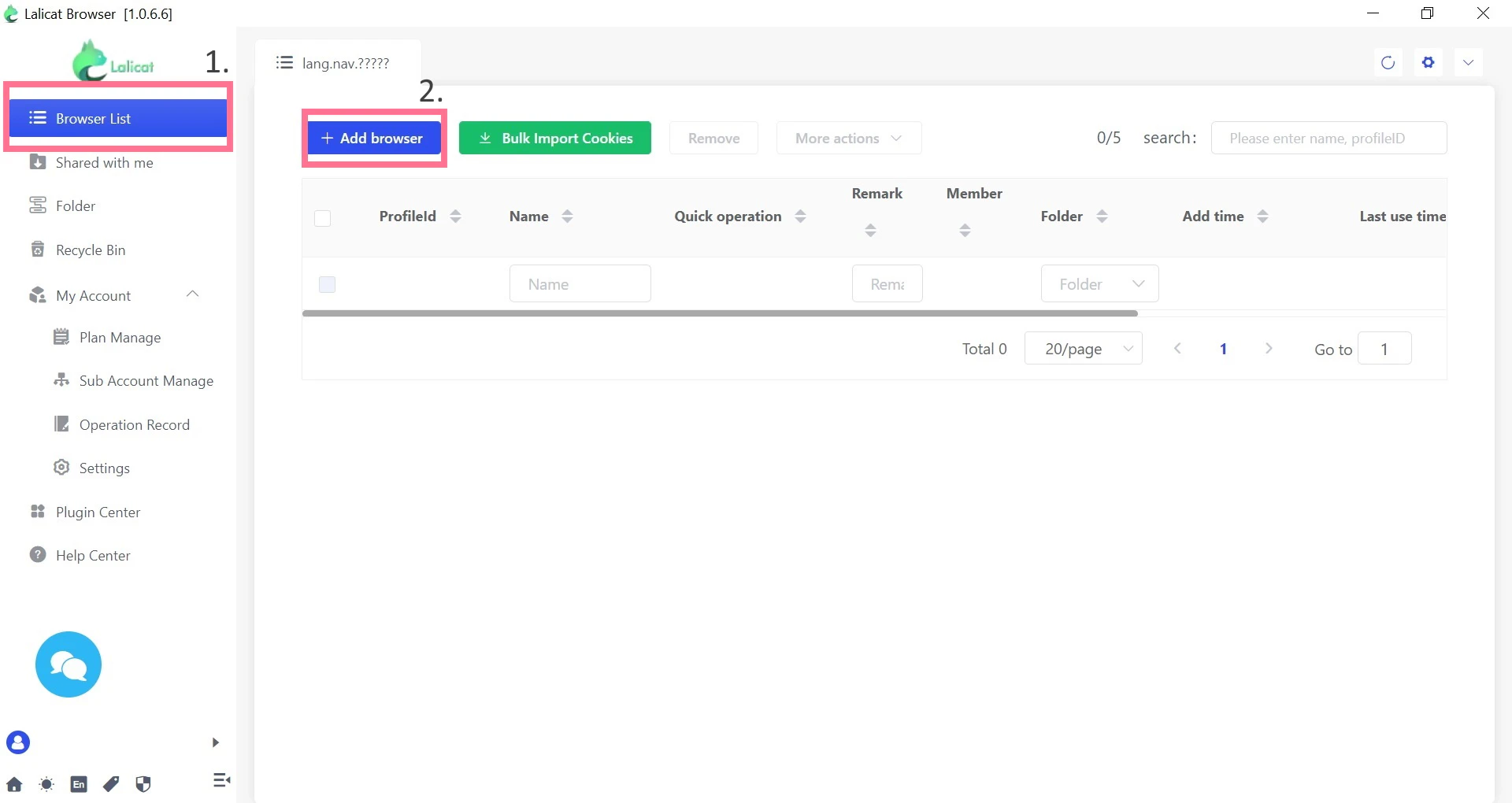
**Step 2.** On the home screen, press **Browser List** and then click **+Add browser** to configure a new browser instance.
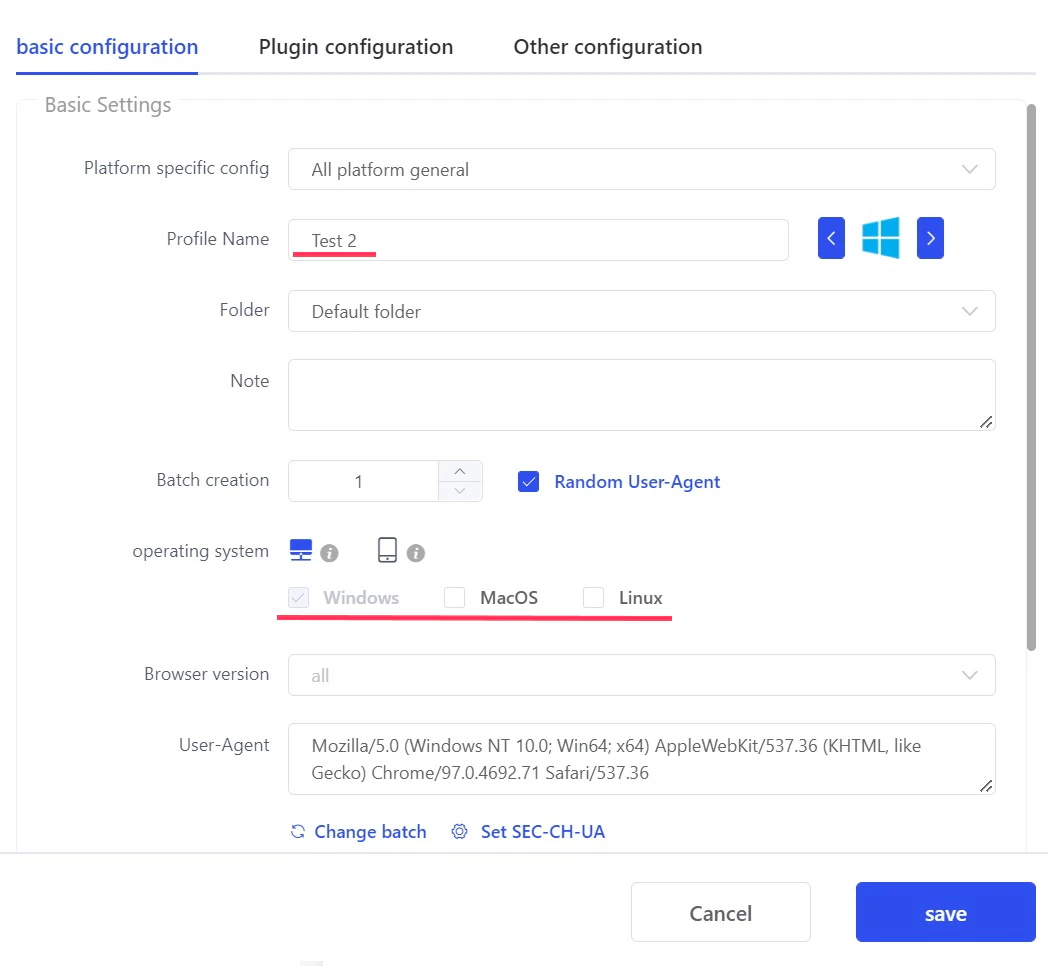
**Step 3.** Under **basic configuration**, fill in the **Profile Name** and select a simulated **operating system** and other settings necessary for the task.
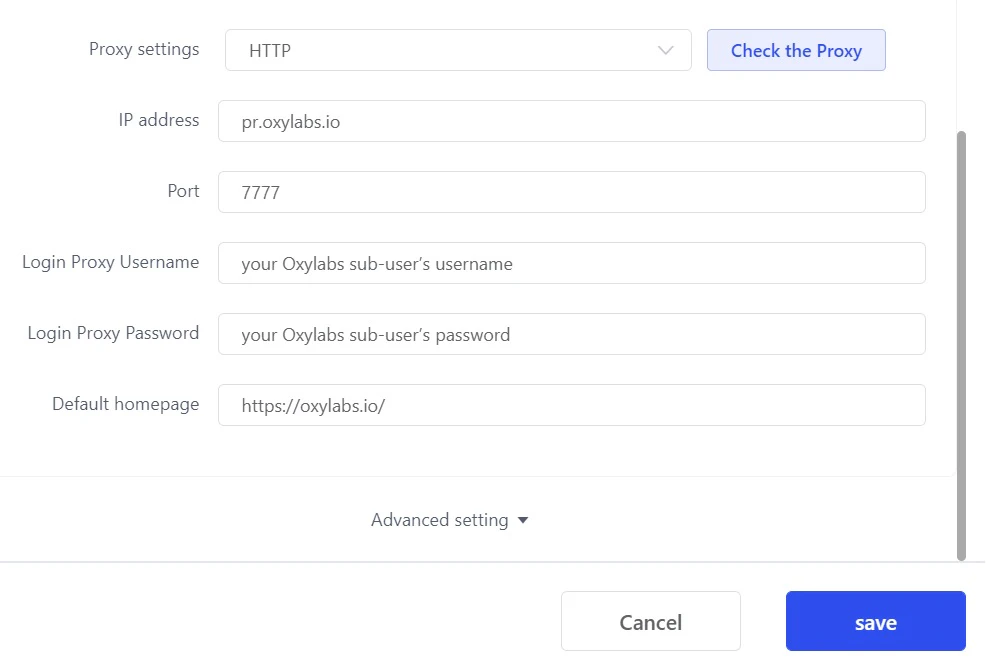
**Step 4.** Under the **Proxy settings**, select `HTTP` as a proxy protocol to configure your proxy settings. Fill in the details:
**Proxy settings:** `HTTP`
**IP address:** `pr.oxylabs.io`
**Port:** `7777`
{% hint style="info" %}
You can also use random or sticky country-specific entries. For example, if you enter `us-pr.oxylabs.io` under **IP address** and `10000` under **Port**, you’ll acquire a US exit node. If you enter `10001` under **Port**, you’ll receive the US exit node with a sticky session. You can find a complete list of country-specific random proxy entry nodes [**here**](https://developers.oxylabs.io/proxies/residential-proxies/country-specific-entry-nodes#random-proxy-entry-nodes) and a list of sticky proxy entry nodes - [**here**](https://developers.oxylabs.io/proxies/residential-proxies/country-specific-entry-nodes#sticky-proxy-entry-nodes).
{% endhint %}
**Login Proxy Username:** `Oxylabs sub-user’s username`
**Login Proxy Password:** `Oxylabs sub-user’s password`
{% hint style="info" %}
You can create and manage your proxy sub-users in our [**dashboard**](https://dashboard.oxylabs.io/en/)**.**
{% endhint %}
You can customize a broader range of options by clicking the **Advanced setting** below.
**Step 5.** Press **Check the Proxy** to see if your proxy is functioning correctly and if a dedicated location is accurate.
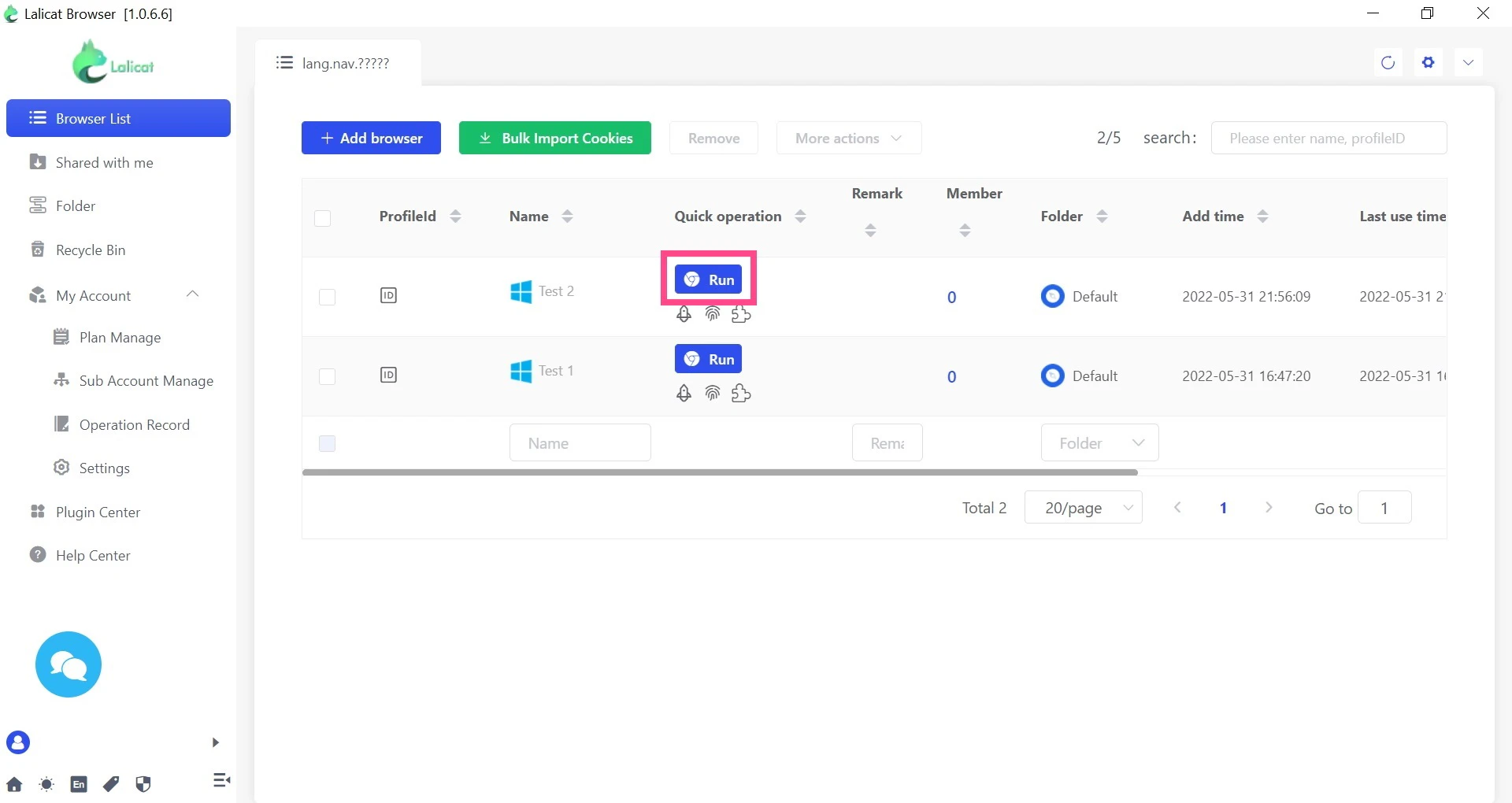
**Step 6.** Finally, click **save** to complete the configuration, and to run the browser - click **Run.**
That’s all! You’ve successfully integrated your Oxylabs proxies with Lalicat Browser.
Find the original Lalicat Browser integration blog post [here](https://oxylabs.io/resources/integrations/lalicat).
---
# Agent Instructions: Querying This Documentation
If you need additional information that is not directly available in this page, you can query the documentation dynamically by asking a question.
Perform an HTTP GET request on the current page URL with the `ask` query parameter:
```
GET https://developers.oxylabs.io/proxies/integration-guides/3rd-party-integrations/lalicat-browser.md?ask=
```
The question should be specific, self-contained, and written in natural language.
The response will contain a direct answer to the question and relevant excerpts and sources from the documentation.
Use this mechanism when the answer is not explicitly present in the current page, you need clarification or additional context, or you want to retrieve related documentation sections.
.jpg?auto=compress,format&fm=webp&q=75)